Do not re-enter until authorities say it is safe.
Fire damage restoration
Fire damage restoration in Austin: recover structure, atmosphere, and home.
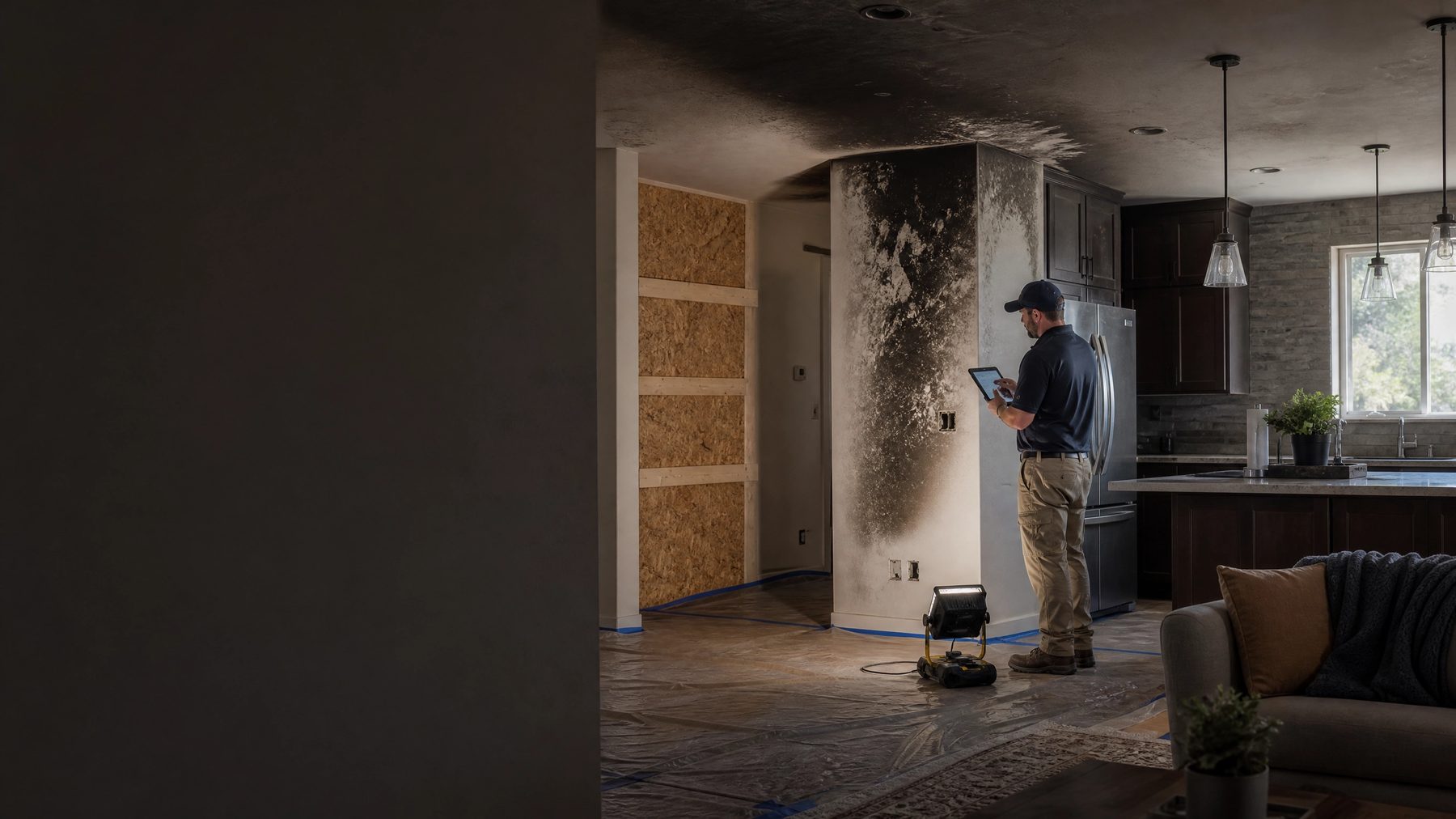
Fire recovery extends beyond what burned. Heat, smoke, water used in suppression, disturbed finishes, and building-system impacts can cross multiple rooms. The response should begin with a disciplined picture of what can remain and what must be repaired or replaced. We handle smoke damage cleanup, soot removal, fire odor elimination, and full reconstruction under one accountable roof.
Request a project review
Tell us what happened at the property.
Share the property details and the team will review the request.
For urgent damage, call (512) 838-4236 →Evidence registerConditionDocumentationStabilizationRepair
What to do right now
Protect openings only when the area is safe to access.
Photograph visible conditions before cleanup changes the record.
01
Six things to do in the next ten minutes.
If the fire is out and the property is cleared by the fire department:
Do not enter until cleared. Never enter a fire-damaged structure until the Austin Fire Department or local authority has officially deemed it safe. Structural integrity may be compromised.
Limit movement. Moving around the property spreads soot particles into clean areas and grinds ash into carpets and flooring. Stay out of the affected rooms.
Do not wash walls or vacuum. Household vacuums will blow fine smoke particulates back into the air. Washing walls with standard cleaners can permanently set soot into the paint or drywall.
Turn off the HVAC system. If the HVAC is running, it is pulling smoke and soot through the ductwork and distributing it throughout the house. Shut it down immediately.
Document before you touch anything. Take wide shots, close-ups, and a short video with the date from a safe distance. Your claim starts here.
Call us, then your carrier. Emergency mitigation, such as board-up and tarping, can start before an adjuster arrives to secure the property. Keep every receipt.
02
Every way fire affects a Central Texas home.
Soot, smoke, heat, and suppression water each produce a different kind of loss—and each needs a different restoration plan.
Protein fires: Kitchen grease and food fires create a yellow-brown, sticky film on surfaces. The fire may be small, but the residue is difficult to clean and carries a strong, lingering odor that requires enzyme-based cleaners.
Synthetic fires: Burning plastics, electronics, and modern furnishings generate black soot laden with corrosive acids. This soot embeds in porous materials like upholstery and drywall, causing rapid staining and requiring pH-balanced detergents.
Natural fiber and wood fires: Fires consuming paper, wood, and natural textiles leave behind dry ash and brittle residue. These require careful HEPA vacuuming before any wet cleaning is attempted.
Smoke web and migration: Smoke particles scatter through air currents, depositing acids on walls, ceilings, and contents far from the fire source. The heat drives smoke into cavities, behind baseboards, and through the HVAC system.
Suppression water and mold: Water used to extinguish flames can seep into subfloors and framing, promoting mold colonization within 24–48 hours in Austin's humid climate. Water damage must be mitigated concurrently with fire damage. Water damage restoration →
Wildland-Urban Interface (WUI) exposure: Homes in Austin's WUI zones face unique risks from embers and radiant heat. Reconstruction must often comply with specific ignition-resistant building materials and ember-resistant mesh requirements under the local WUI code.
03
The fire you called about is rarely the whole story.
Smoke follows framing, wiring, and thermal currents into places nobody looks. An InterNACHI Certified Master Inspector reads the house the way an adjuster reads a claim—where the smoke went, what the heat compromised, and what the water touched.
The hidden soot. The soot behind the switch plates, inside the wall cavities, and coating the HVAC coils.
Structural compromise. Heat can weaken framing and degrade concrete or masonry without consuming it.
What the water touched. Electrical panels, insulation, and subfloors saturated by fire hoses.
Code compliance. Navigating Austin's WUI code requirements for ignition-resistant materials during the rebuild.
Documentation adjusters read as evidence, not as a contractor's opinion.
04
Most restoration companies clean your house and hand you a list of contractors. We are the contractor.
In Austin, mitigation and reconstruction are almost always two companies, two contracts, and two versions of the story your adjuster hears. We keep it to one scope, one point of contact, and one claim file—from board-up to the last coat of paint. And because remodeling is half of what we do, a loss can become the renovation you were already planning, with the covered work and the upgrades scoped and priced separately.
05
Insurance claims: What's usually covered, what isn't, and what Texas lets you decide.
Usually covered: Sudden and accidental fires, smoke damage, and the water damage resulting from firefighting efforts. The cleaning, the removal, and the rebuild to pre-loss condition—subject to your policy, deductible, and limits.
Usually not covered, or needs an endorsement: Damage to landscaping or outbuildings may have separate, lower limits. Code upgrade coverage (Ordinance or Law coverage) is required to pay for the extra costs of bringing an older home up to current building codes (like Austin's WUI code) during reconstruction.
Your rights in Texas: You choose your contractor. A carrier's "preferred vendor" is a suggestion, not a requirement. Your policy asks you to prevent further damage, so emergency mitigation can start before the adjuster arrives. Keep every receipt and photo. Texas keeps contractors and public adjusters separate. We document and estimate your loss; we don't negotiate your claim.
What we hand your adjuster: Detailed damage mapping and soot classification. Dated photo and video documentation, before and after every step. An itemized estimate in the Xactimate format carriers use. On-site meetings with the adjuster on request. Insurance claim assistance →
06
Fire damage restoration across Austin and 8 nearby communities.
Lakeside homes off 620, hillside lots in Westlake, slab homes in the north and south suburbs—each service-area page covers the fire and wildland exposure issues we see there.
Austin | Round Rock | Cedar Park | Georgetown | Pflugerville | Leander | Lakeway | West Lake Hills | Dripping Springs
07
The damage is still happening while you read this.
Call now for a real arrival window—or request an inspection to map the extent of the smoke and structural impact.
Related services: Water damage | Storm damage | Insurance claim assistance | Commercial restoration | Post-damage reconstruction
Project sequence
A documented path from first review to final walkthrough.



Questions answered
Frequently asked questions
How soon can you start cleaning up after a fire?
We can dispatch for emergency board-up and tarping immediately. However, interior cleanup and mitigation cannot begin until the fire department releases the scene and confirms the structure is safe to enter.
Can I clean the soot off the walls myself?
No. Soot is highly acidic and easily smeared. Using household cleaners or water can drive the soot deeper into the drywall or paint, making it impossible to remove and requiring full replacement. Professional dry sponges and specific chemical agents are required.
Will the smoke smell ever completely go away?
In most homes, yes, when it is treated correctly. We do not use masking agents. We use thermal fogging, ozone, or hydroxyl generators that penetrate materials exactly as the smoke did, neutralizing the odor at its source rather than masking it.
What happens to my furniture and belongings?
We perform a pack-out. Salvageable items are carefully inventoried, packed, and moved to a secure facility for specialized cleaning and deodorization. They are stored there until your home is rebuilt and ready for them to return.
Do I need to upgrade my home to current codes when rebuilding?
Often, yes. If your home is in one of Austin's Wildland-Urban Interface (WUI) zones, the rebuilt portions may need to comply with current ignition-resistant material requirements. We manage this permitting and compliance process. Check if your insurance policy includes "Ordinance or Law" coverage for these upgrades.
How does water damage factor into a fire claim?
Fire hoses and sprinklers introduce hundreds of gallons of water. We document this water damage as part of the same loss. We handle the water extraction and structural drying simultaneously with the fire mitigation to limit the conditions mold needs to take hold.
Do I have to hire a separate contractor for the rebuild?
No. We handle both the mitigation (cleanup) and the reconstruction. Keeping it under one roof ensures finish continuity, faster timelines, and a single, cohesive claim file for your insurance adjuster.
Austin-area service
Check coverage for your property.
Service availability depends on location, project type, access, and current scheduling.
View service areasRequest a project review
Request a restoration project review.
Share the property details and the team will review the request.
For urgent damage, call (512) 838-4236 →